



You Came In as Fellows. You Leave as EdTech Leaders
Cohort 2 of the Mastercard Foundation EdTech Fellowship Takes the Stage — 312,447 Beneficiaries Later, the Numbers Speak for Themselves
A pitch competition is rarely just about pitching. At its best, it is a culmination of months of iteration, of honest feedback absorbed and acted on, of the quiet refusal to give up on a vision when the path forward was unclear. On 18 March 2026, the second day of Tanzania EdTech Week, the twelve ventures of Cohort 2 delivered exactly that kind of culmination.
Before 124 investors, educators, policymakers, and development partners at the Johari Rotana Hotel, they did not just present products; they also shared insights. They presented evidence.
Congratulations from the Mastercard Foundation
With Jumanne's opening words still resonating in the room, the floor shifted online to Eliud Chemweno, Head of EdTech Ecosystems at the Centre for Innovative Teaching and Learning, Mastercard Foundation. Joining the gathering virtually, Eliud delivered a warm and substantive congratulatory address directly to the twelve graduating ventures — acknowledging not just their outcomes, but the character it took to get there.
The Foundation's message reinforced a theme that would echo throughout the day: that Demo Day was not a finish line, but a platform — a moment to demonstrate, to connect, and to signal to the wider ecosystem that Tanzania's EdTech ventures are ready for the next level of partnership and investment.
A Government Ready to Adopt, Not Just Observe
The institutional weight of the day was further underscored by the presence of the Guest of Honour, Dr. Aneth Komba, Director General of the Tanzania Institute of Education (TIE). Dr. Komba's keynote carried significance well beyond the ceremony — it sent a clear signal that the government is moving from acknowledging EdTech's potential to actively considering how to embed it within national systems.
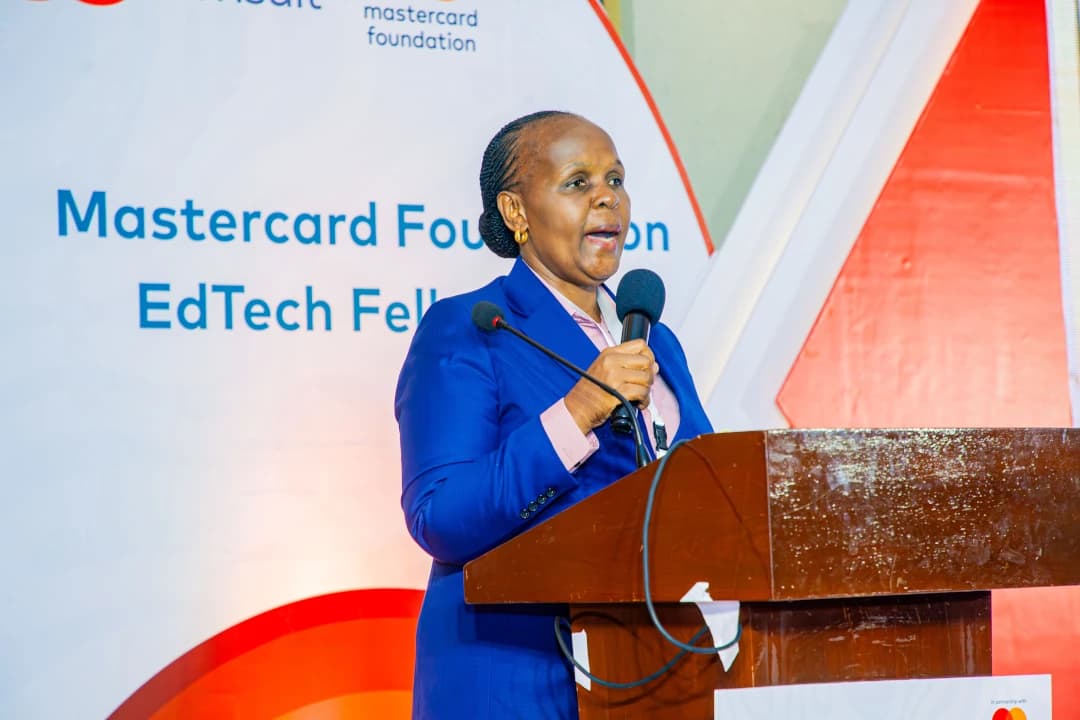
Dr. Komba commended the partnership between Sahara Consult and the Mastercard Foundation, highlighted TIE's existing collaboration with fellowship alumni, and reaffirmed the institution's openness to aligning EdTech innovations with the national curriculum. But it was her statement on government adoption that drew the most attention in the room:
For the twelve ventures on stage, this was more than encouragement. It was an institutional signal — that the pathway from fellowship graduation to government-backed adoption and procurement is not hypothetical. It is being actively built.
The Numbers That Matter
Jumanne Mtambalike opened by setting the frame — and the numbers demanded attention. Across the two cohorts of the Mastercard Foundation EdTech Fellowship, 22 EdTech ventures have collectively reached 312,447 total beneficiaries. That is 71% of the programme's two-year target, achieved ahead of programme close.
The breakdown of that reach tells the fuller story:
Within Cohort 2 specifically, the 12 graduating companies entered the fellowship with a combined learner target of 96,000. Several exceeded it. HM&Y Tech achieved 162% of their target. Tusome reached 91%. The Cube hit 64%. Each pushing forward in communities not always well-served by technology, with resources that were never unlimited.
The Experience Zone: More Than a Showcase
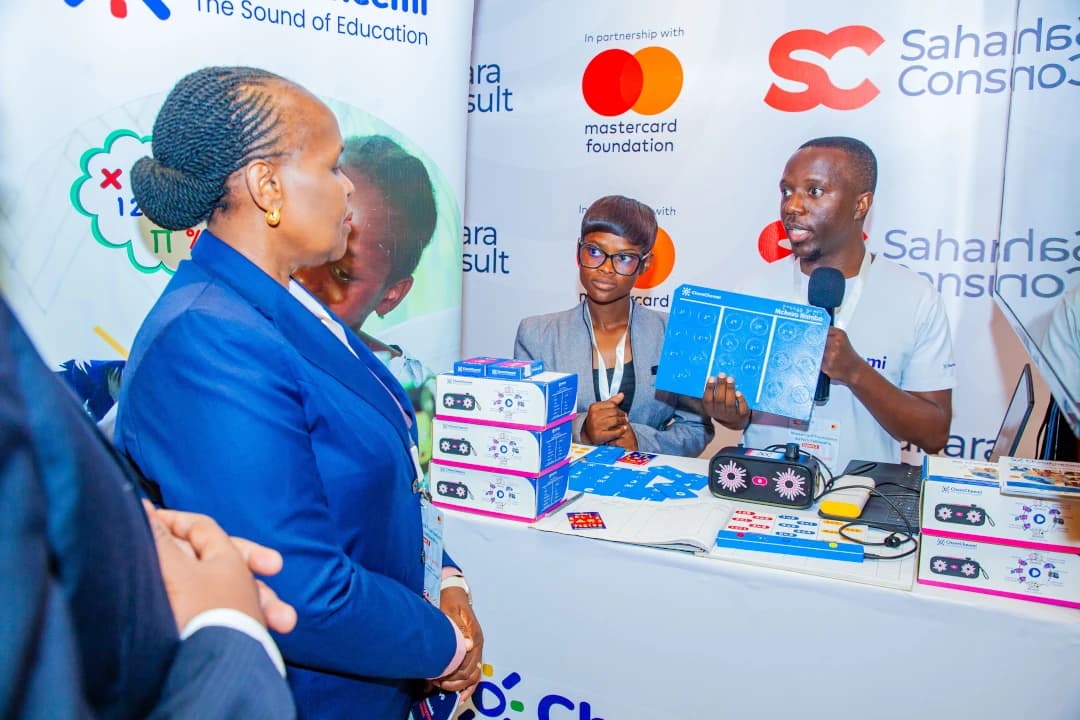
Before the formal presentations began, participants were invited into the Experience Zone, an interactive exhibition space where each of the 12 Cohort 2 ventures set up dedicated booths showcasing their products live. Investors, policymakers, and development partners moved through the space, engaging directly with founders, testing platforms, and exploring hardware tools hands-on.
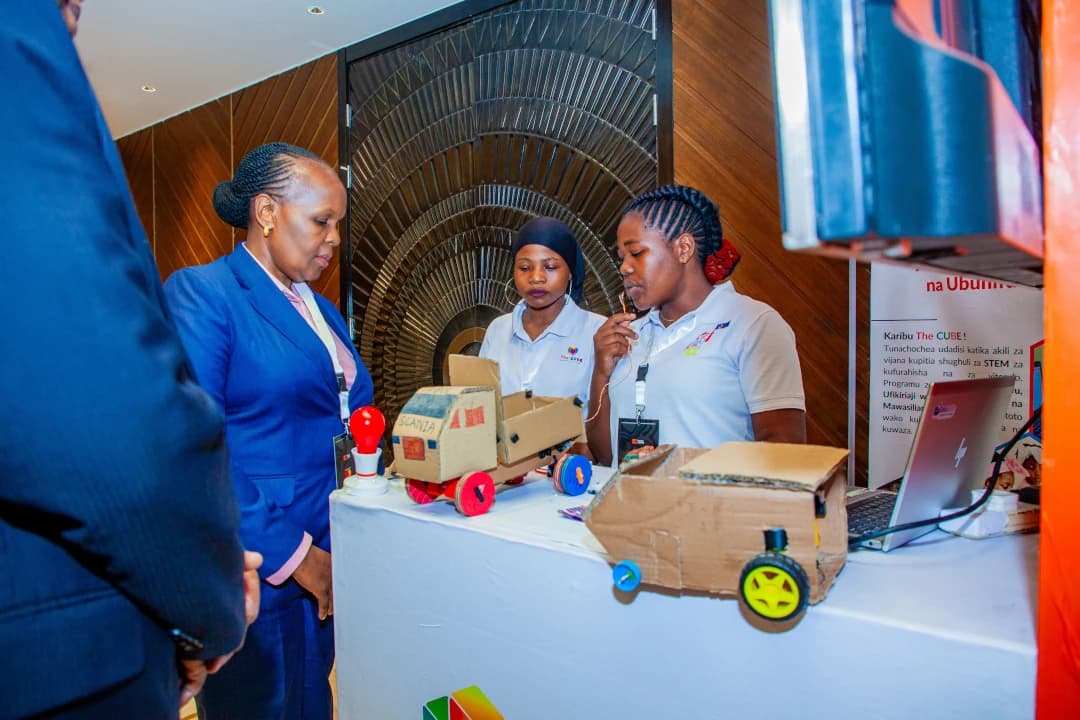
The Experience Zone was deliberately designed not as a display, but as a dialogue, an opportunity for venture teams to demonstrate their solutions in real time and for attendees to ask the questions that matter most before the formal pitches. It set a substantive, informed tone for everything that followed.
Meet the 12 Cohort 2 Ventures
Each of the 12 ventures was introduced to the audience through a professionally produced impact video before their live presentation — capturing real-world outcomes on learners, teachers, and communities. What followed was not a standard pitch, but a narrative focused on implementation insights and the road ahead. Together, they represented the breadth and depth of Tanzania's EdTech ecosystem:
- SWAHILI DMAKERS Limited: Enhances education through 3D printing technology, promoting hands-on learning, STEM education, and inclusivity. Provides affordable 3D printers, tactile models for visually impaired students, and training workshops to equip learners with practical skills and digital literacy. Founded by Joshua Macha.
- TUSOME: A learning platform dedicated to transforming learning experiences through homeschooling support, personalised learning plans, STEM programmes, and school management services covering teacher performance, payments, and student progress. Founded by Dr. Hamis Juma.
- HM&Y Technologies Ltd: Enhances education across Tanzania's mainland and Zanzibar through EduGamez — a gamified, curriculum-aligned learning platform — and ShuleYangu, a cloud-based school management system that streamlines student tracking, communication, and financial management. Founded by Masoud Hamad.
- ChemChem Africa Company Limited (ChemCheemi): Uses IoT, machine learning, and game-based learning to deliver interactive, offline educational experiences for children aged 3-14, covering foundational literacy, numeracy, and STEM in Kiswahili and English — including Braille for visually impaired learners. Founded by Kelvin Paul.
- The CUBE: Enhances STEM education through its CubeBlocks coding platform, offering online and offline learning via school workshops and bootcamps with a deliberate focus on accessibility, gender inclusivity, and teacher empowerment. Founded by Zainab J Ramadhani.
- Inspire Hatua: A VR-powered interactive learning platform enabling students to explore virtual biology labs and conduct virtual tests using 3D animation, AI tools, gamified learning, multilingual content, and audiobooks for accessibility. Founded by Cuthbert Adam.
- teKsafari: An integrated EdTech solution built on Nuru — a Swahili-based programming language — combining native-language coding education, interactive STEM tools, and accessible digital platforms to empower students to become tech creators. Founded by David Mpinzile.
- ProjeKt Inspire: Provides underprivileged students with modular, portable STEM kits preloaded with coding programmes, offline-friendly curriculum materials, and AR/VR interactive guides to make hands-on STEM learning affordable and accessible. Led by Kelvin Kimath.
- Kreative Karakana: Revolutionises entrepreneurial education through a mobile-friendly, Swahili-based learning platform with localised content, interactive features, and data-driven insights, offering industry-relevant courses, including FMCG, to empower Tanzanian youth with real-world business skills. Founded by Lameck Lawrence.
- SADG Company Limited (AkiliHub): Developed AkiliHub, an AI-powered personalised tutoring platform for O Level students, combining a Learning Management System with self-paced learning to address digital access gaps and resource limitations. Founded by Mohamed Suleiman.
- TechStar Innovation Hub Limited: Uses emerging technologies, including AI, coding, and robotics to make learning engaging and accessible, providing affordable STEM kits and coding bootcamps that equip students with digital and problem-solving skills. Founded by Eng. Michael Thomas.
- Yana Corp: A cloud-based School Management System designed to bridge educational gaps in under-resourced areas, featuring mobile optimisation, data analytics, e-learning integration, offline access, and multi-language support to ensure inclusivity. Founded by Nuru Lema.
What the Acceleration Built
The outcomes on stage at Demo Day did not emerge from talent alone. They were the product of structured, intensive support across four domains delivered through the fellowship:
- Investor Readiness: Fellows refined financial models, impact measurement frameworks, and investor narratives — moving from founders with good ideas to founders who could defend those ideas in any room.
- Intellectual Property and Pitch Evaluation: Fellows strengthened the defensibility of their value propositions, ensuring that what they had built was theirs to protect and grow.
- Product and Technology Development: Technical foundations were deepened, and user experience sharpened — particularly for low-connectivity and low-literacy contexts.
- Partnership and Market Development: Strategic relationships with schools, government bodies, and implementation partners were built and formalised.
The Open Floor: A Room That Reflected Back
Following the venture presentations, Eng. Henry Kulaya moderated an Open Floor Reflection — a structured session that invited all participants, including ventures, investors, policymakers, and ecosystem partners, to share collective takeaways and aspirations for scaling EdTech in Tanzania.
It was a session that revealed the depth of thinking in the room. Participants spoke not only about individual ventures, but about the broader ecosystem conditions needed to sustain and scale EdTech innovation in Tanzania: procurement pathways, curriculum alignment, digital infrastructure, and the importance of continued multi-stakeholder collaboration.
A Call to the Room
Jumanne closed his address with a direct challenge to every investor, policymaker, and development partner in attendance:
“The EdTech companies you are about to meet are solving some of the most stubborn challenges in Tanzanian education. They are doing it with creativity, with technology, and with a deep understanding of the communities they serve. They do not need charity. They need partnerships. They need procurement. They need policy support. And they need capital. I hope you leave here today ready to provide at least one of those things.”
It was a challenge issued with clarity and without apology — and the structured one-on-one sessions that followed between fellows and attendees suggested the room was listening.
Closing Reflections and Looking Ahead
COO Musa Kamata delivered the closing reflections of the day — summarising the key lessons from the Cohort 2 journey and setting out the next steps for both graduating fellows and the programme as a whole. He acknowledged the resilience demonstrated by each venture and the collective growth of the cohort as a community of practice, not just a class of grantees.
The formal programme concluded with a Networking Reception and Dinner — giving investors, partners, policymakers, and founders the space to continue conversations started in the hall, deepen relationships, and take the first steps toward the partnerships that Demo Day had been designed to catalyse.
Key Takeaways for the Ecosystem
- EdTech works in Tanzania — in low-connectivity environments, on basic mobile phones, in rural schools and urban classrooms alike. The question is no longer whether it works. It is whether the investment follows the evidence.
- The funding gap remains the critical constraint. Despite strong preparation and validated traction, many ventures face a persistent gap from seed to Series A. Closing this gap requires sustained commitment from the investor community.
- Government alignment is not optional at scale. Ventures with established Ministry relationships reported smoother growth pathways. The upcoming multi-ministry EdTech workshop — announced the previous day at the Cohort 3 Kickoff — is a direct response to this imperative.
- Structured acceleration compounds. The delta between where Cohort 2 fellows entered the programme and where they stood on Demo Day is the clearest evidence that the model works. Cohort 3 inherits both the evidence and the expectation.
Looking Forward
With Cohort 2 having graduated, and Cohort 3 formally launched the day prior, Tanzania EdTech Week 2026 marked a rare and deliberate continuity: one cohort crossing the finish line as the next crossed the starting line. The Mastercard Foundation EdTech Fellowship is now three cohorts deep, with 22 ventures graduated or in-programme, and a growing body of evidence that structured acceleration in the Tanzanian context produces outcomes that matter.
The next Demo Day is already on the horizon. Cohort 3 has its work cut out for it.